
When Sarah planned her 120-guest vineyard wedding, she budgeted $800 for grazing tables and ended up paying $2,400.
What happened? She missed three hidden cost drivers that turn simple spreads into budget bombs.
Before you sign any catering contract, you need to know exactly where your money goes.
Three Grazing Table Formats and What Each Costs
How do you picture your guests enjoying appetizers on your big day? You have three grazing table formats to choose from, each with different labor and setup needs.
Individual boards come pre-assembled with precise portions. You’ll skip on-site setup entirely, though fixed costs mean higher per-person pricing for smaller groups.
Grazing tables require on-site assembly and styling. You’re looking at lower per-person rates, but higher total order value since they include more food per guest. Fully disposable flat lay options for 20-50 guests run about $15 per person, dropping to $14 for 50-100 guests. Elevated versions add a $200 flat rental/setup fee for upscale presentation.
Grazing walls work as vertical installations. They’re labor-intensive, so you’ll pay premium pricing that treats them as decor plus food.
Per-Person Pricing Breakdown: From $15 Budget Spreads to $50+ Premium Tables
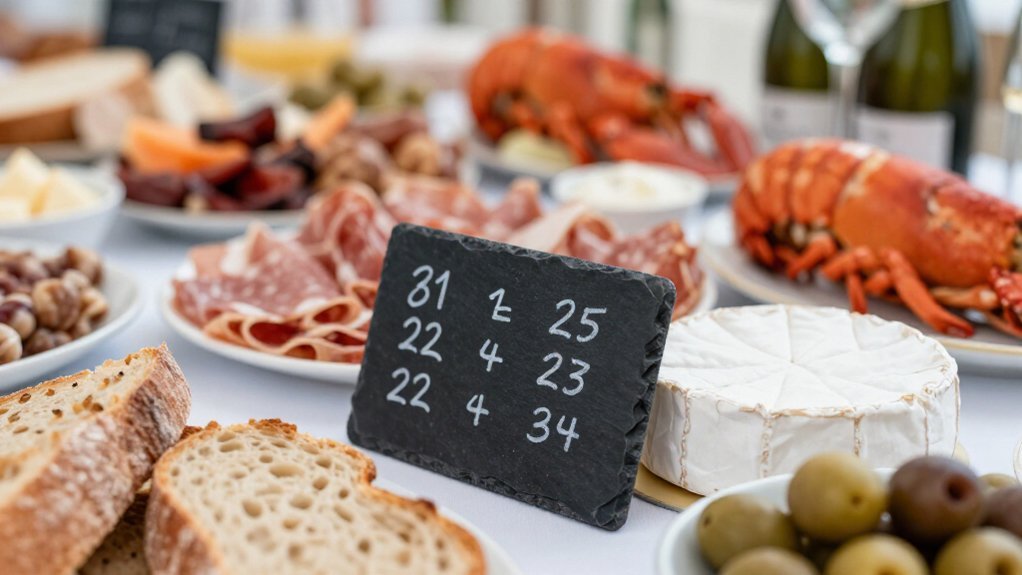
What exactly goes into that per-person price tag you’re quoted? Grazing table pricing breaks down into clear pieces you’ll want to understand.
Your per-person rate starts with ingredients cost. You’re paying roughly $2.50 to $5.00 for cured meats, $2.00 to $4.50 for cheeses, plus smaller amounts for crackers, fruit, and nuts per guest. Most caterers triple this food cost to cover overhead and profit.
Each guest’s plate holds roughly $4.50–$9.50 in meats and cheeses—expect to pay three times that after markup.
Then comes packaging and delivery, which adds flat fees based on your location. A complexity premium gets tacked on for intricate designs or special dietary needs.
Want high-end grazing tables with styling rentals? Expect a $200 flat fee plus on-site setup on top of your base rate.
Finally, seasonal pricing shifts your costs. You’ll pay more during peak wedding season, May through September, when demand runs highest.
Rush Fees and Custom Costs: Protecting Your Budget From Surprises
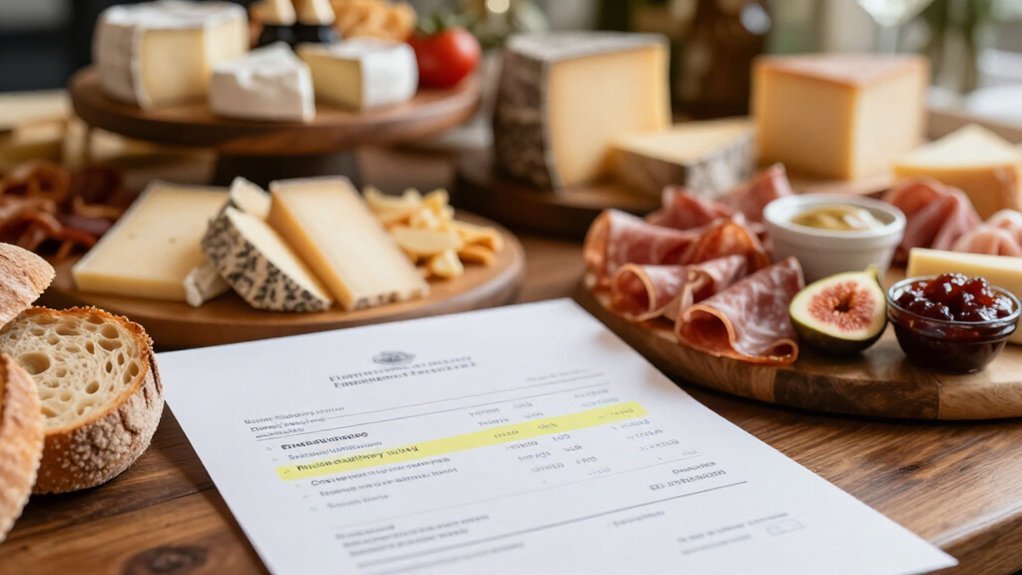
You’ve mapped out your per-person costs and know what goes into that base price. Now let’s talk about the pricing factors that can sneak up on you: rush fees and custom costs.
Rush fees hit when you’re short on lead time. Need your grazing table in 48 hours? Expect a surcharge, often 15-25% of your order. These fees protect the caterer’s schedule and your wedding catering quality.
Custom costs cover special requests: themed decor, dietary swaps, or premium ingredients. Want edible flowers or a vintage mirror display? That’s extra.
For solid budget protection, ask your caterer to separate base food costs from delivery, setup, and complexity premiums. Get minimum lead time requirements in writing.
This clarity keeps your grazing table beautiful without breaking your budget.