
Is a grazing table really the stress-free catering choice everyone claims, or does it hide tricky math behind the pretty displays? You will discover that nailing the portions takes more than guesswork; it demands precise calculations tied directly to your guest count and timeline.
Your wedding deserves a spread that looks abundant from the first toast to the last dance, not one that empties halfway through cocktail hour. The right guide changes this trend from overwhelming Pinterest project into a practical, crowd-pleasing centerpiece. You will learn exactly how to size, stock, and sustain your table without breaking your budget or your sanity.
What Size Table Do You Need Per Guest Count?
How do you figure out the right table size for your guest list? You match your grazing table size directly to your guest count, and you’ll keep everyone happily snacking without empty gaps or overcrowded boards.
Match your grazing table size directly to your guest count, keeping everyone happily snacking without empty gaps or overcrowded boards.
Here’s your quick reference: For 6–12 guests, grab a grazing board. For 25–50 guests, you’ll want a medium table or multiple boards. Planning for 75+ guests? Deploy a full grazing table with room for decor and floral styling.
Your portion guidance scales with time and style. Longer weddings need more table surface area and height variation to prevent those awkward bare spots. For a typical 20-guest balance, you’ll focus on cheeses and meats first, then fill gaps with fruits, vegetables, and dips.
Templates and calculators help you nail the math. A 20-guest setup fits a medium board; 40–80 guests need a full-length table or clustered boards. Staging items ahead of time saves your sanity. For larger events, use 7-foot wide surfaces as your reference, and always leave space for replenishment and guest flow.
Recommended Products

【Elegant Acrylic Design】Our Acrylic Sign features a sleek and modern design, making it the perfect addition to your wedding signage. Its crystal-clear finish ensures that your guests will be captivated by its beauty during the reception.
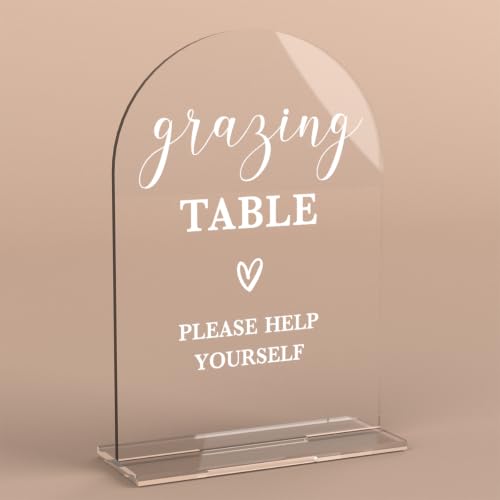
【Unique Design】: Arch wedding decoration is a new trend, minimalism will never go out of style. We love the clean lines of these arch acrylic wedding signs! This wedding sign will be the perfect addition to any rustic, vintage, country, garden or woodland themed wedding.
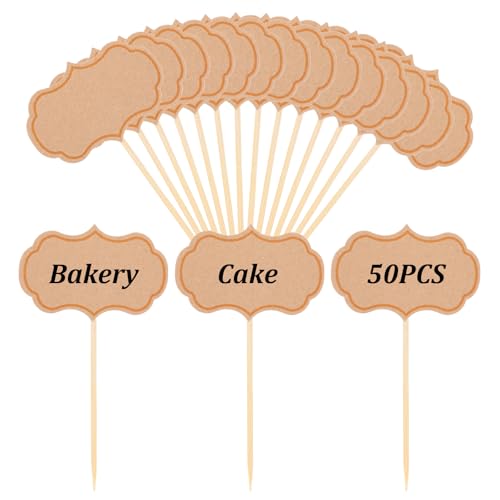
【Perfect size for Easy Labeling】Food labels for party buffet are 9*6cm/3.5*2.3inch in size, with 3.9-inch long bamboo sticks and 5 adhesive stickers. This size ensures clear visibility during buffets or parties and is highly practical
How to Arrange Food So the Table Looks Full All Night
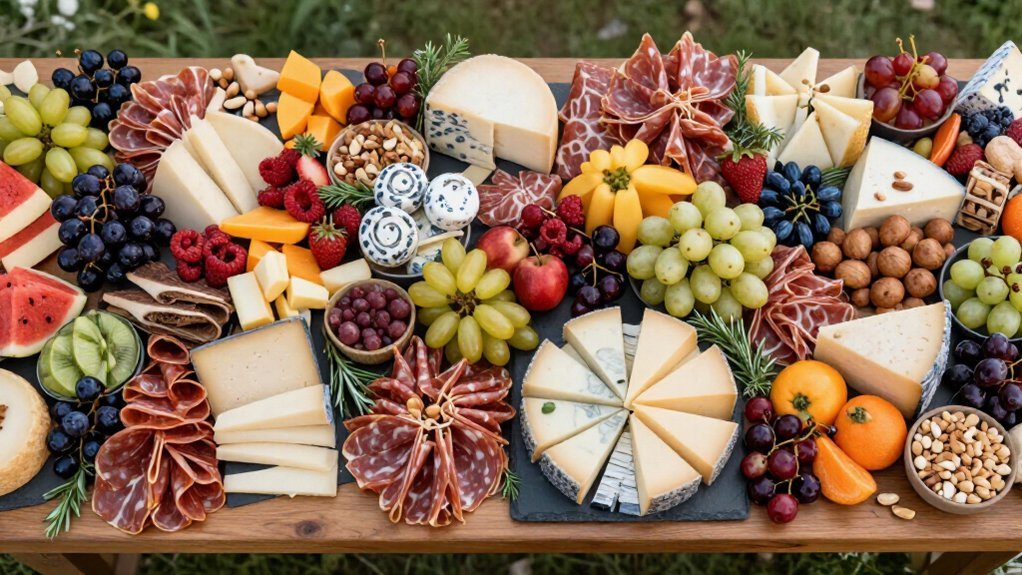
What techniques keep your grazing table looking abundant from the first guest to the last dance? Start with height variation. Layer 1–2 serving plates or use tiered stands, and stack cheese blocks high. These tall piles become instant focal points.
Position your breads, crackers, fruits, vegetables, and dips first to fill visual space. Place meats last, leaving them out about 2 hours max. This keeps edges crisp and appetizing.
Scatter 2–3 small bowls for nuts, olives, or dips, and keep them in original containers with tiny spoons for easy grabbing. Use multiple platters and stagger items to cover gaps.
Strategic replenishing throughout the night maintains that lush, never-ending look. You’re not just serving food; you’re creating constant fullness that wows guests from start to finish.
Recommended Products

Quality Construction: Our small wooden appetizer forks are crafted for a splinter-free, food-safe, and non-toxic experience. Made entirely from 100% natural wood, our cocktail forks ensure you can enjoy your charcuterie, fruit or desserts worry free.

Mini chalkboard signs: Use to label food, display messages, or as place cards for weddings, parties, buffets, classrooms, and home

VALUE-ADDED COMBINATION SET: You will get 500 cocktail picks, which come in 4 different styles and 3 different sizes. The various styles and sizes can better meet your different needs. You can use them to handle a large amount of food, assemble more delicious appetizer kebabs, and make more elaborate cocktails and mixed drinks.
Cheese, Charcuterie, and Accompaniment Ratios
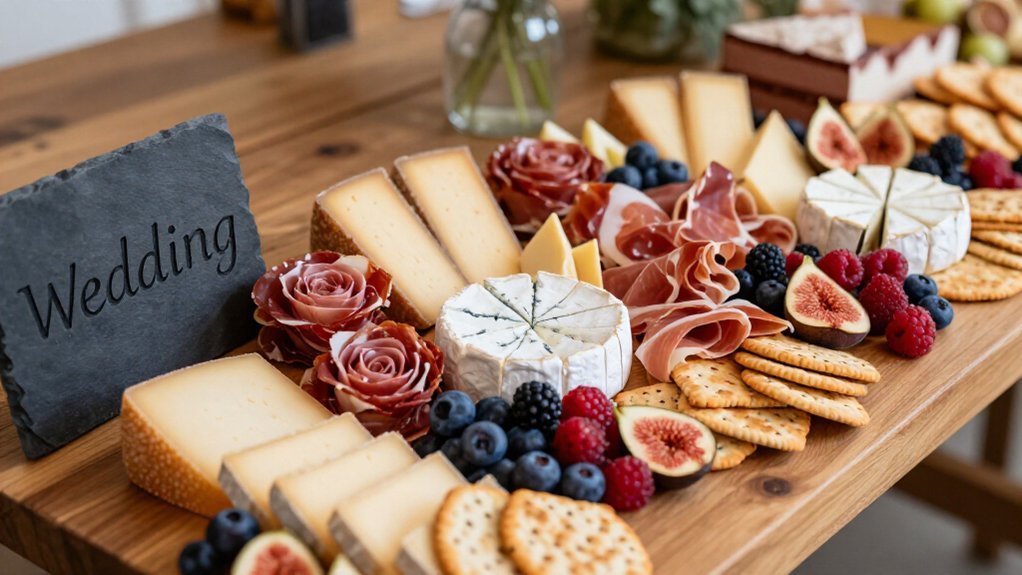
You’ve nailed the art of keeping your table looking lush all night, so let’s talk numbers that actually work. For your grazing table, you’ll want balanced portions that satisfy without waste.
Start with cheese: plan 3 ounces per guest per hour. For 20 guests, that’s about 3.75 pounds total. Mix it up with soft, hard, and special varieties, aiming for 2–3 types. Cut that first slice yourself to invite guests to dig in.
For charcuterie, allocate 4 ounces of meat per person per hour (5 pounds for 20 guests). Choose two to three cured meats like prosciutto, salami, or capicola for variety.
Don’t forget accompaniments: 4 ounces of crackers or bread per guest, plus 2–3 small bowls of dips. Replenish meats last, and pile cheese high for easy grabbing and great presentation.
Recommended Products

【All-in-One Wooden Tiered Riser Display Stands+Event-Ready】Cologne organizer for men on vanities, display stands cabinets for collectibles figures in living rooms, display succulents in bedrooms, or 4 tier wood spice rack organizer in kitchens. Switch from daily use (grazing table supplies) to events – create social-media-ready wooden dessert table display set at parties, buffet risers and stands, or boost candle display for vendors booth must haves

Perfect 4-Tier Sizes for Versatile Display 16.1"×7.48" Design: This 4 layer serving tray set includes four trays of different heights (approx. 2.8", 5.5", 8.3"– tailored to your 16.3"L×7.7"W platform). The well-proportioned layers create a stunning cascading effect, ideal for cupcakes, pastries, cookies, finger foods, cheese, fruits, appetizers, and more. Whether you're hosting a wedding, birthday, holiday, or daily brunch, this tiered dessert stand maximizes table space while keeping every treat visible and accessible

Set of 2 for double the display space:Designed with a spacious stepped layout, this 3-tier cupcake tower comfortably holds up to 50 standard 2" cupcakes. The extra-large base tray (15.7" x 11.8") and the 6.2" height gap ensure your desserts aren't crowded, providing excellent visibility and easy access for every guest.
Portion Calculator: Food Quantities by Guest Count
Wondering exactly how much food you’ll need for your crowd? A grazing table calculator takes the guesswork out of planning. You’ll input your guest count and event duration, then get specific per-guest portions for every category.
A grazing table calculator takes the guesswork out of planning—just input your guest count and get precise portions for every category.
For cheese and meat quantities, plan for 3 oz of cheese and 4 oz of meat per guest per hour. Add 2-3 oz of fruits and vegetables, plus 2 oz of dips. For crackers, budget about 3 pieces per person each hour.
Hosting 20 guests for two hours? You’ll need roughly 120 oz of cheese and 160 oz of meat. Stretching to four hours? Double those figures or plan a smart replenishment rhythm.
Tools like OnePageParty’s calculator factor in whether you’re serving cocktails or a full meal. Adjust down for lighter grazing, or up when expecting hungry guests.
Recommended Products

One (1) 11 oz Microwavable Bowl of Pace Queso Blanco Dip

9oz. FRITOS Mild Cheddar Dip

A delicious blend of smooth Monterey Jack cheese, tomatoes, jalapeno peppers, and a touch of green chili and red bell peppers.
When to Set Out and Refresh Food at Your Wedding
When exactly should you start setting out your grazing spread, and how do you keep it looking fresh all night?
Begin your grazing table setup 2 to 3 hours before guests arrive. Start with non-perishables like baskets, platters, and stands to build your base. Add dips, nuts, and fillers for height and texture. Wait until closer to service time to place meats and cheeses; these perishables need careful timing.
You’ll refresh the display every 1 to 2 hours to keep it full and inviting. Watch for empty spots and gaps that make the table look picked over. Restock meats within 2 hours at room temperature for safety and quality. Keep backup items chilled until needed.
This rhythm keeps your spread beautiful, safe, and appetizing from the first guest to the last dance.
Recommended Products

Grease-Proof & Leak-Proof Coating – Kraft paper charcuterie cups are lined with an oil-proof, water-resistant coating that keeps cheese, olives, and fruit from soaking through, staying sturdy and mess-free for hours

Mini chalkboard signs: Use to label food, display messages, or as place cards for weddings, parties, buffets, classrooms, and home

Our black charcuterie cups are made from premium, eco-friendly black paper that ensures durability and strength. Whether you’re serving cheeses, fruits, or nuts, cold food or hot food, these paper snack cups are designed to hold everything securely