
Like archaeologists brushing dust from ancient coins, you can uncover how your anniversary traditions took shape. Start with silver and gold, those medieval Germanic wreaths meant to bring luck. Then watch Queen Victoria add diamonds at year sixty.
Emily Post stepped in next, listing gifts for every year by 1922. Retailers finished the job in 1937, filling in all the gaps. Your family’s own twists, the paper gifts and vow renewals, layer on top. But where did paper come from, and why does it still stick around?
How Medieval Europe Invented Anniversary Symbols
The story of your anniversary celebration starts centuries before you blow out candles on a cake. You’re walking through medieval Europe, where couples first began marking marriage milestones with meaningful gifts.
This tradition takes root in Germanic Central Europe. You see husbands honoring wives with silver wreaths at 25 years and golden ones at 50 years. These aren’t just pretty decorations; they’re rich with symbolism. Silver represents radiance and value that has grown over time. Gold signifies something even more precious: love that has been tested and proven.
You might wonder why these specific metals mattered. In those days, silver and gold were treasures worth saving for. Giving them showed you’d invested decades of commitment. You’re witnessing the birth of anniversary symbolism, one that will travel through centuries to reach your own celebrations today.
Recommended Products

Premium Crystal-Clear Acrylic – Crafted from durable, high-quality acrylic with a polished, sleek finish that catches the light beautifully and enhances your 25th anniversary celebration.

Celebrate 25 Years of Love and Commitment:Honor a beautiful milestone with this 25th wedding anniversary Tree of Life suncatcher. Designed to symbolize enduring love, unity, and growth, it is a heartfelt tribute to 25 years of marriage shared between couples, parents, or grandparents.
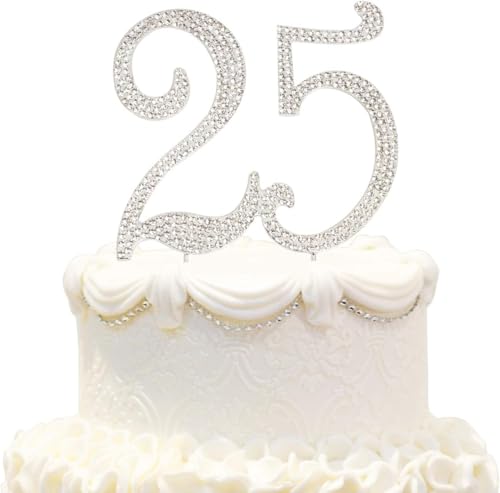
Why Germanic Silver and Gold Wreaths Still Matter
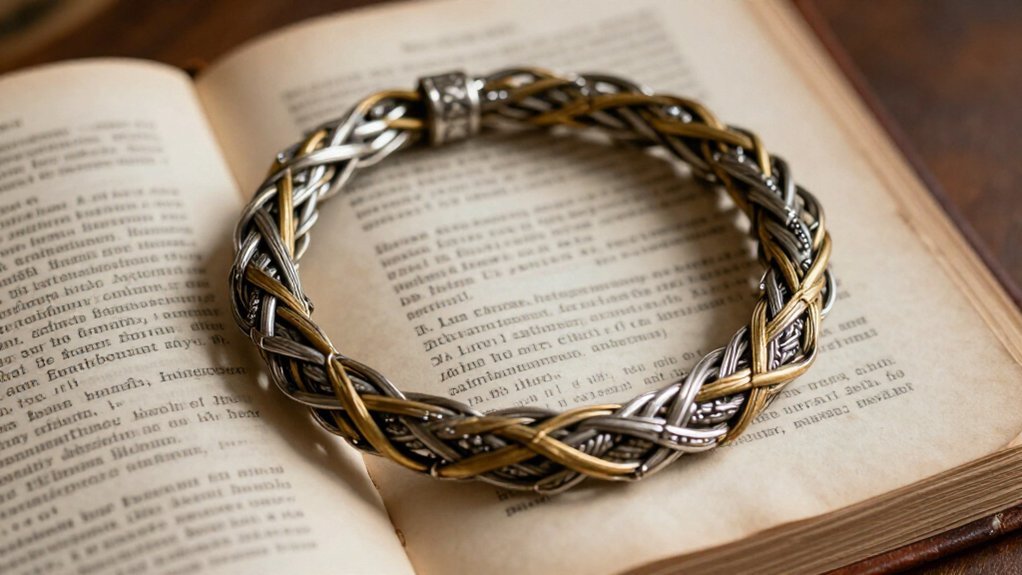
You’ll discover how Germanic couples first celebrated 25 years with silver wreaths and 50 years with gold ones, symbols of harmony that became your “silver wedding” and “golden wedding” traditions. These visible emblems of fidelity spread from Central Europe into your culture, shaping the way you mark anniversaries today.
Understanding this legacy helps you appreciate why precious metals still honor your lasting commitment.
Recommended Products


Size: Gold crown width 5.25 inches, height 1.7 inches; Sparkly rhinetone crown, one size fits all head shapes and different hairstyles; The "Happy 50th Anniversary" sash measures 3.7 inches wide and 61.6 inches long; Whether you're celebrating your first anniversary or commemorating decades of love and devotion, our Anniversary Headband and Sash Collection is the perfect choice for capturing the magic of the moment

Celebrate 50 Years of Love:Honor a lifetime of love and commitment with this beautiful 50th wedding anniversary Tree of Life suncatcher. Designed to celebrate a golden anniversary, it symbolizes strength, family, growth, and everlasting love shared over 50 wonderful years together.
Silver Wreath Origins
Where did your silver anniversary tradition really come from? You’ll find it rooted in Germanic Central Europe, where silver wreaths first celebrated 25 years of marriage. These weren’t just pretty decorations; they symbolized harmony and lasting commitment between partners.
You can thank Germanic customs for shaping this practice. Back then, communities honored couples with wreaths made of silver, marking a quarter-century together. The term “silver wedding” grew directly from these ceremonies.
Here’s what made these wreaths special:
They represented ongoing unity in your relationship
They balanced celebration with reflection on shared years
They connected your personal milestone to centuries of tradition
As this custom spread, it helped create the anniversary gift lists you know today. Your silver anniversary carries genuine historical weight, echoing genuine devotion across generations.
Gold Jubilee Legacy
Why do these ancient wreath traditions still resonate at your own anniversary celebrations? You carry forward a legacy that began in Germanic Central Europe, where silver marked 25 years and gold crowned 50. These weren’t random choices. Silver and gold wreaths symbolized harmony and enduring partnership, circles without end.
You can trace this influence directly to your modern celebrations. Victorian popularizers borrowed these Germanic customs, coming up with “silver wedding” and “golden wedding” for English speakers. While bronze and copper later joined anniversary lists, silver and gold remained your central anchors.
Today, you still honor these milestones prominently. When you celebrate your 25th or 50th, you’re participating in centuries of tradition. The metals matter because they represent tested, lasting value, just like your marriage.
How Queen Victoria Created the Diamond Anniversary
Legacy isn’t just about what you leave behind. It’s also about what you celebrate along the way.
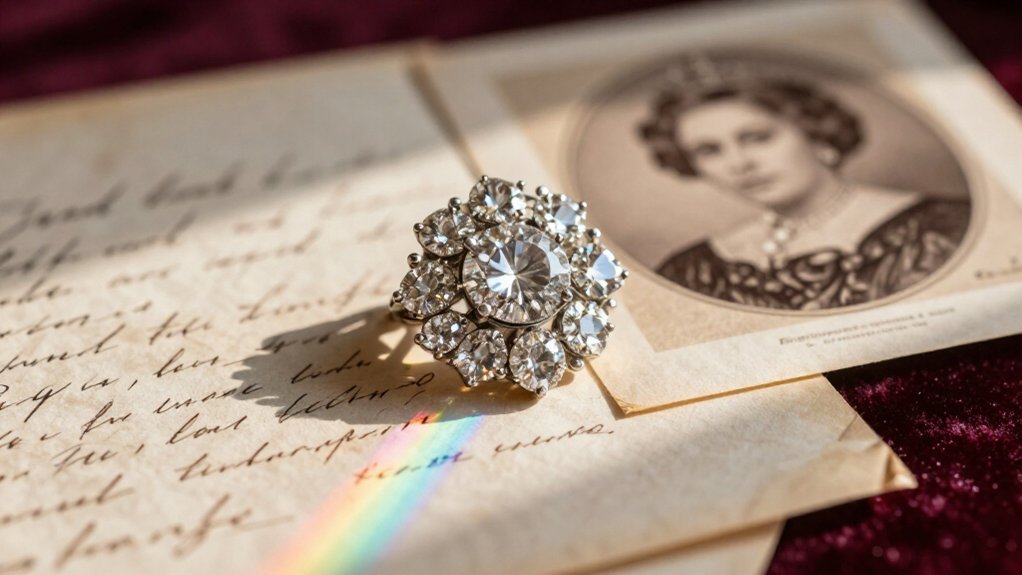
When Queen Victoria marked her 60th year on the throne in 1897, she didn’t just wear a crown. She sparked a tradition you’re still using today.
Before Victoria’s Diamond Jubilee, most couples only celebrated silver (25 years) or gold (50 years) anniversaries. Victoria’s highly publicized celebration put the 60-year diamond milestone on everyone’s radar. You can thank her for connecting that rare, brilliant gemstone with six decades of commitment.
During the Victorian era, prescribed anniversary lists gained popularity. Victoria’s jubilee helped standardize the diamond as the symbol for 60 years, representing endurance and bright, lasting quality. So when you shop for your grandparents’ 60th anniversary, you’re participating in a royal tradition that started with one queen’s remarkable reign.
Recommended Products

PERFECT SIZE: Each roll measures 17 inches wide by 16.5 Feet long
PERFECT SIZE: Each roll measures 17 inches wide by 16.5 feet long

FOLDED SHEETS: The package includes 6 sheets of flat wrapping paper. Each sheet measures 19.7 inch wide x 27.5 inch long and folded for easy storage. It is suitable for medium and small gifts.
When Emily Post First Listed Year-by-Year Gifts
Emily Post’s 1922 Blue Book marked a real turning point for how you think about anniversary gifts. Before she came along, you would’ve seen scattered early gift lists with just a few big milestones, but Post laid out eight clear years for you to celebrate, from your 1st all the way to your 75th.
Her practical etiquette advice helped you, and everyone else, move beyond just the silver and gold anniversaries. This set the stage for that full year-by-year system you browse today.
Recommended Products

Size and Package -- 7x5ft (Width×Height). Only 1 Pc backdrop. Backdrop stand or clips are not included

Romance for Every Moment Transform weddings, anniversary parties, or cozy living spaces with this wooden “Still the One” sign. Its loving message weaves romance into celebrations and everyday home life.

【Endless Decorating Possibilities】Transform this minimalist square backdrop stand into a breathtaking focal point for any event. Its high-strength structure effortlessly supports heavy floral arrangements, LED light strings, greenery, tulle, or lush balloon garlands. Create a stunning DIY wedding arch that perfectly reflects your unique vision and aesthetic.
Emily Post’s Legacy
When did celebrating each and every anniversary become something you’d actually plan for? You can thank Emily Post for that shift. In 1922, she published her famous Blue Book, and suddenly you had a year-by-year roadmap for anniversary gifts.
Before Post came along, you’d only find scattered milestones like your 1st, 5th, 10th, 25th, and 50th. Most years? You’re on your own. Post improved the tradition by expanding the list, giving you something concrete to celebrate annually.
Her work laid the groundwork for what you’d recognize today. By 1937, the National Retail Jeweler Association formalized gifts through the 75th anniversary, building directly on Post’s foundation.
Early Gift Lists
Early gift lists began taking shape in English-speaking countries during the 1800s. You’re looking at a system that started simple: paper for year one, wood for year five, and tin for year ten.
By the early 1900s, you’ll find suggestions expanding to include straw for your second anniversary, candy for your third, and leather for your fourth. Your seventh year brought flowers, while year twelve offered linen, fifteen brought crystal, and twenty gave you china.
The tradition origins stretch across both sides of the Atlantic. Germanic Central European influences helped raise these gifts in importance. You’ll notice the practice grew more formal throughout the early twentieth century, setting the stage for the complete lists you reference today.
Emily Post didn’t pull her year-by-year list out of thin air, and you’re about to see where she found her inspiration.
Etiquette Evolution Impact
Where did your yearly anniversary gift list really come from? You can thank Emily Post for expanding your options. Her 1922 Blue Book took anniversary etiquette beyond a handful of Victorian milestones. Suddenly, you’d find gift symbolism for more years than just your 1st, 5th, and 25th.
Before Post’s influence, you’d only celebrate major anniversaries with traditional materials. But she helped you imagine marking every year with meaning.
Then, the 1937 National Retail Jeweler Association formalized suggestions covering each year through the 20th, and every fifth year after that. You’d see straw for year two, leather for year four, flowers for year seven.
Today, you’re still building on Post’s foundation, with yearly lists stretching to your 50th anniversary and beyond.
How 1930s Retailers Expanded Every Anniversary Year
Why did your grandparents suddenly need a specific gift for their 12th anniversary? You can thank the American National Retail Jeweler Association for that. In 1937, they formalized gift lists for every year up to the 20th anniversary, then every fifth year after. This changed everything.
Before 1937, you’d find gifts only for major milestones like your 25th or 50th. Retailers saw opportunity in this gap. They standardized year-by-year suggestions, so you’d know exactly what to buy your spouse each anniversary. This made shopping predictable and simple.
The expansion also meant stores could stock inventory year-round, marketing fresh ideas annually. You still follow this framework today, with lists stretching past your 50th anniversary. Those 1937 retailers turned occasional celebrations into a steady retail tradition you’re still following.
Recommended Products

EXQUISITE PACKAGING This Anniversary Gift for Couple elevates the gifting experience. The thoughtful packaging ensures a stunning presentation for Wedding Anniversary Gifts for Couple

Heart Shape Design: The necklace is engraved with "'I love you for always and forever'", which expresses your love and will surely warm her heart. You can show your love to your wife, girlfriend, mother, daughter and other women. This double heart necklace is a meaningful gift for her

Anniversary Book for Couple: Capture marriage and anniversary memories to cherish forever; this first anniversary gift for couples records your journey from meeting to engagement and stores yearly highlights for up to 70 years of your anniversary
Why Some Couples Still Renew Vows Decades Later
You’ve spent years following those gift lists the retailers cooked up back in the 1930s. Yet there’s something deeper that keeps pulling couples back to the altar decades later. That pull is vow renewal, a practice rooted in both faith and love.
Many anniversary traditions connect us to something bigger than paper or silver gifts. You might picture a quiet church ceremony or a backyard celebration with family. Either way, you’re restating promises that have been tested and proven.
Why do couples actually do this? Consider these reasons:
- You honor the spiritual side of your commitment through blessings and ceremonies.
- You mark milestones with intention, not just parties.
- You publicly celebrate what private devotion has built over years.
Your anniversary traditions become living proof that love deepens with time.
Recommended Products

We Still Do - 25th Wedding Anniversary Centerpiece Sticks INCLUDES 15 We Still Do - 25th Wedding Anniversary table toppers in three different shapes, 15 table topper sticks and stickers for easy assembly. 25th anniversary party table decorations are perfect for an anniversary party.

【PREMIUM QUALITY】 The "25 years loved" cake topper is made of premium quality acrylic, health and hygiene.

Metallic Silver guest book with Silver foil stamped 25th Anniversary design on cover
When Presidents and Monarchs Send Anniversary Letters
Ever wondered how your anniversary could land you a letter from a king, queen, or president? You can actually request these special messages yourself, and here’s how.
Ever wondered how your anniversary could land you a letter from a king, queen, or president?
From Monarchs
Commonwealth realms offer commemorative messages from the monarch for your 60th, 65th, 70th anniversaries and beyond. You’ll submit applications to Buckingham Palace or your governor-general’s office. Australians receive letters from the governor-general starting at 50 years, while Canadians get messages at 50 years and every fifth anniversary after that.
From Presidents
The United States sends greeting cards from presidents for your 50th anniversary and all milestone years following.
Catholics may also seek a papal blessing for special anniversaries like your 25th, 50th, or 60th.
Check your country’s requirements early, gather your marriage certificate, and submit ahead of your date. These keepsakes become treasured family heirlooms.
Recommended Products


Unique 50th Anniversary Commemorative Gift - Celebrate a milestone of 50 years of marriage with our unique Golden Metal Wreath and Crystal Plaque. This exceptional gift is perfect for a memorable 50th anniversary celebration.

【Package Included】 - You will get a Happy 50th Anniversary signature guest book(without pen). It doesn't need to assemble and is a practical tool to sign the names or blessings of the guests at the 50th anniversary party. It is durable and suitable for long term storage for you, your friends or family beautiful memories. It will not fade for years, perfect for writing, durable, suitable for long term storage. You can look back over time at your amazing creation.
Why Paper Became the First Anniversary Tradition
Those royal letters mark decades of commitment, but let’s look at where anniversary traditions begin. You’ll find your first anniversary paper gift rooted in medieval European customs. Back then, people linked each year to luck-bringing materials that showed growing marital commitment. Paper started simple and humble, perfect for a new marriage still finding its footing.
In Germanic Central Europe, paper kicked off anniversary milestones. This practice spread and shaped English-language traditions you follow today. Early gift lists stayed modest, featuring paper and flowers before expanding in the 1800s and 1900s.
Why paper? Consider these practical roots:
- It’s fragile yet renewable, like your fresh marriage
- It’s affordable, welcoming all couples
- It invites personal touches: love letters, printed photos, or hand-drawn art
Your paper gift predates fancier milestones, anchoring traditions that build every year.
Recommended Products

【1st Paper Anniversary Gift】Celebrate one year married with a meaningful paper anniversary gift that turns a sweet tradition into a memorable moment. This adorable toilet paper roll doll captures the humor and love of your first wedding anniversary, making it a thoughtful way to mark one year together.1 year paper anniversary gifts,paper anniversary gifts for husband,1 year anniversary paper gifts,1st anniversary gifts for couple,first anniversary gifts for couple,1st anniversary gift for him,first anniversary gifts for him

Perfect First Anniversary Gift – The first year of marriage is traditionally marked with paper, symbolizing a fresh start and the strength that grows from delicate beginnings. This handmade paper rose captures that meaning beautifully.

50th Anniversary Favor Bag: You will get 1pc white and gold happy 50th anniversary gift bag, 1pc white gold 50th anniversary greeting card, 3pcs tissue papers. you can wrap a gift with tissue paper, write your wishes on the blank greeting cards, and put them into the 50th anniversary gift bag. which is quite convenient and eye-catching party favors set
How Families Turned Anniversaries Into Shared Celebrations
You’ll discover that celebrations aren’t just for couples anymore. More families now bring kids into the fold, building traditions that teach commitment and create yearly memories. Consider starting simple rituals early, like planting a tree or writing gratitude letters together.
Recommended Products

SUITABLE SIZE: The banner measures approximately 35x72 inches, which is a perfect size for most venues. The banner is equipped with hanging ropes at the four corners for easy hanging. It can make your family and friends feel the unique party atmosphere and leave you with unforgettable anniversary memories.

Product Size: 7(W) x 5(H) FT, ( 82.6 x 59 inches ), (2.1meter wide x 1.5meter high).
Family Legacy Building
Why do some anniversaries feel like private milestones while others become beloved family traditions? You strengthen your family legacy when you celebrate openly, showing your kids what lasting commitment looks like in real time.
Consider these ways to build shared meaning:
- Recreate your wedding meal together, letting everyone taste your history
- Plant a tree each year, watching your love grow literal roots
- Watch your wedding video, passing tissues and stories around
Your anniversary gifts don’t need to follow old rules. Handmade presents work beautifully. Experiences beat objects. What matters is creating structure your family anticipates.
About 34% of couples already include family in their celebrations. You’ll join them when you invite participation. Simple rituals become anchors, your partnership becomes everyone’s example, and suddenly you’ve built something bigger than yourselves.
Children Learning Commitment
Your kids are always watching, even when you think they aren’t. They notice how you treat your partner. Anniversary traditions give you a chance to show them what lasting commitment looks like.
Family involvement in these celebrations teaches children that love isn’t just a feeling. It’s work you keep doing. A 2024 survey found 34% of couples now include family in their anniversary celebrations, and you can join them.
Try simple, repeatable practices: an annual dinner where everyone shares what they appreciate about the couple, or letters your children help write. These rituals grow with your kids, keeping family involvement natural and meaningful.
You’re showing them that relationships matter to everyone, not just the two people in them. That’s a lesson they’ll carry into their own lives.
Yearly Memory Making
Where do your anniversary memories actually live? You can build them together through simple, yearly habits that grow richer with time.
Start an anniversary journal. Each year, you and your partner write one entry about favorite outings, milestones, and a recurring prompt you both answer. This creates a living story you’ll treasure.
Memory making works best when you prioritize experiences over stuff. Consider these approaches:
Give experiential gifts like cooking classes or hiking trips you do together. Create photo-in-a-photo keepsakes that layer your celebration pictures year after year. Or establish shared meals, whether fancy dinners or weekly anticipation cooking.
Add playful rituals too: back massages, beginner yoga, or homebrewing. These evolve as your family changes, keeping your connection fresh without pressure.
Which Old Traditions Modern Couples Still Follow
When you celebrate your wedding anniversary, you’re joining a tradition that’s lasted hundreds of years.
Celebrating your wedding anniversary connects you to centuries of tradition, honoring love that has stood the test of time.
You probably know some classic gifts already. Paper marks your first year, silver shines at 25, and gold crowns the 50th. These traditional symbols date back to the Middle Ages, when people believed materials should grow stronger as your marriage endures.
Victorians expanded milestone celebrations, especially after Queen Victoria’s 60th Diamond Jubilee in 1897. Soon, retailers created longer gift lists, adding leather, crystal, and china for earlier years.
Today’s couples still honor these time-tested traditions while making them their own. You might exchange handwritten notes (paper’s modern twist) or plan experiences instead of objects. The 1937 official list helps if you’re stuck, but you decide what matters. Whether you follow centuries-old customs or blend old and new, you’re keeping something beautiful alive.
Recommended Products

Meaningful Design: this 4th anniversary for her adopts apple shaped design, with the theme of the fourth wedding anniversary, simple and not monotonous, they are printed with warm sentences, which will bring a nice and warm atmosphere

Timeless 8th Anniversary Gift - Celebrate eight wonderful years together with this beautifully crafted heart sculpture, engraved with “卌 ||| YEARS & COUNTING” to mark the milestone. A meaningful keepsake that speaks of love, commitment, and shared memories.

Meaningful Clock Gifts for Couples - During engagement, marriage and other important moments in life, use this glass clock to express your blessing to the engaged couple, the newlywed couple, or the married couple. Take this beautiful clock as a wedding prayer gift, symbolizing your heartfelt wishes for their eternal love and representing your sincere prayer for their harmonious and happy union
How to Find a Vintage Newspaper From Your Wedding Day
Finding a vintage newspaper from your wedding day gives you a snapshot of the world as it was when you said “I do.” Imagine unrolling the front page from your anniversary date, reading the headlines that greeted guests that morning, and seeing what mattered to the world on your special day.
You’ll want to track down an authentic copy. Here’s how to start:
- Contact newspaper archives directly for your exact wedding date edition
- Search specialty dealers who preserve front pages in gift boxes with certificates
- Pair your find with an anniversary newspaper book that adds yearly headlines
This keepsake links your personal story to history. You create a tangible timeline you can pass down, blending your celebration with moments that shaped the world.