

You’re not a doctor or a chef, but you absolutely can keep guests with food allergies safe at your wedding. It starts with knowing the big allergens, like peanuts, shellfish, and dairy, and spotting where they hide in sauces, dressings, and even desserts.
You’ll ask guests directly about allergies and how serious they are when they RSVP. Then you’ll share that info clearly with your caterer and serving team, making sure every dish is labeled and cross-contact is prevented. Train your staff to serve safely and respond to emergencies.
Ready for the five steps that make this manageable?
Identify Major Allergens and Their Hidden Sources
Before you begin planning your wedding menu, you’ll want to get familiar with the nine major allergens that could turn your celebration into a medical emergency. These are milk, eggs, peanuts, tree nuts, wheat, soy, fish, sesame, and crustacean shellfish. Sesame joined the list in January 2023, so you’ll need to watch for it in tahini, hummus, and baked goods.
Proper labeling helps you spot hidden sources. Look for parenthetical notes like “lecithin (soy)” or “Contains” statements listing allergens. Advisory “may contain” warnings aren’t required by law. They address cross-contact, which happens when allergens accidentally mix during preparation.
Since no safe thresholds exist, even tiny traces can harm sensitive guests. You’ll want to read every label carefully and ask vendors about their kitchen practices.
Recommended Products

Size: 1x2 inch, 500 Pcs stickers.
ENOUGH QUANTITY: You will get 1 roll of pink gold food allergy notice stickers, containing 500 thermal labels. Long-lasting supply for your bustling home kitchen

Superior Quality and Durability: crafted from quality paper with a film coating, our white food allergy warning labels boast exceptional durability and fade resistance, the precision of advanced printing technology ensures that the allergies' restaurant food labels remain clear and effective over time, making them ideal for long-term use
Collect Wedding Guest Allergy Details Through Your RSVP Process
Because you can’t keep guests safe if you don’t know what they need, your RSVP form is the perfect place to start gathering allergy details.
Your RSVP form is the first line of defense in protecting guests with food allergies.
Include a dedicated space for guests to list specific allergens and their severity, such as peanuts or dairy. Collect names alongside these details so you can build a clear reference list for your kitchen and service team.
Ask guests to confirm if they need gluten-free, vegan, or other options on your RSVP. Add a spot for extra notes, like latex allergies.
Give guests a way to update their information after submitting, such as a contact email. Early collection lets you share data with caterers for proper menu labeling and helps them plan against cross-contamination risks before your big day.
Recommended Products

Allergen Warning Labels contains 9 common allergens: Dairy, Soy, Fish, Wheat, Eggs, Gluten, Shellfish, Peanuts, Treenuts and You can use a pen, or permanent marker to select allergens or to write the allergies on allergen list stickers.

ENOUGH QUANTITY: You will get 1 roll of white food allergy notice stickers, containing 500 thermal labels. Long-lasting supply for your bustling home kitchen and small business
Super Value package and perfect size: 1000 food allergy stickers with a convenient 1x2 inch size, perfect for labeling bakery items and cookies
Communicate Allergies Clearly to Your Serving Staff
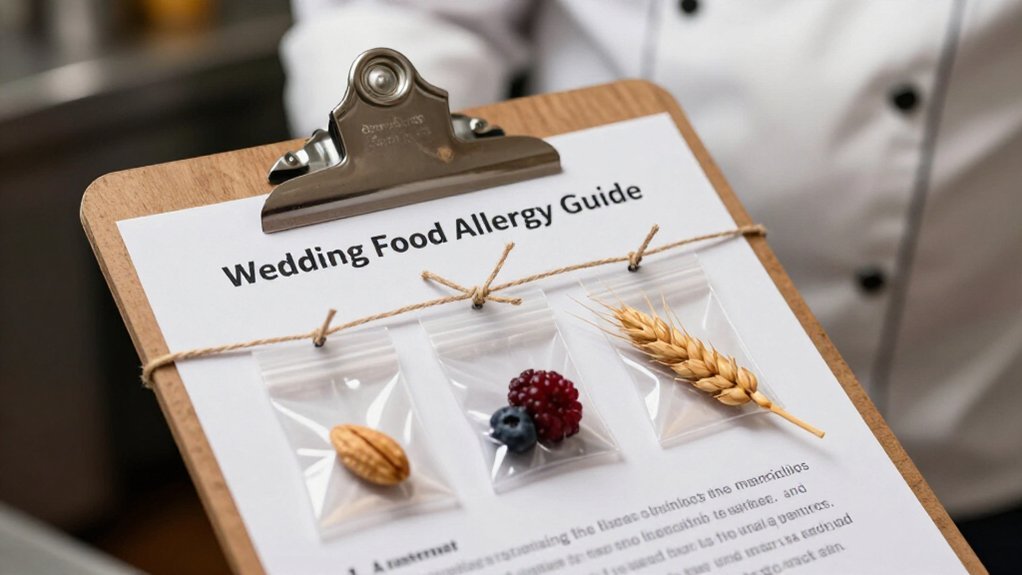
How do you make sure your carefully collected allergy details actually protect your guests when it’s time to eat? You’ve got to nail the communication with your serving staff.
Start by sharing allergy information with every server before service kicks off. Give them a written list that links each guest’s name to their specific allergens. This simple step prevents mix-ups when plates hit the table.
Invest in staff training that covers proper plate delivery. Teach your team to avoid cross-contact, which happens when allergens spread from one dish to another through shared utensils or hands. They’ll confirm each guest gets the right meal.
Use color-coded cards or labels for quick reference during the busy reception. And don’t forget a backup plan: establish a clear protocol for last-minute allergy updates, so changes reach both kitchen and serving staff instantly.
Recommended Products

Value Combo Pack: This bundle includes 500 pink Cottage Food Law disclosure labels + 500 white Food Allergy Notice stickers, total 1000 adhesive labels to meet daily homemade food packaging demands, great for home bakers, cottage food operators, pastry makers.

Real chicken is the #1 ingredient in this delicious kitten cat food that’s rich in nutrients and full of flavor

TRANSPARENT INGREDIENT LABELING: No fillers, just traceable, human-grade components from farm to bowl, ideal for owners seeking natural cat food dry with full disclosure.
Work With Your Wedding Caterer to Prevent Cross-Contact and Label Dishes
Your caterer is your biggest ally when you’re trying to keep guests with allergies safe, so it’s worth sitting down with them early and often. Start by sharing a complete list of every guest’s name and their specific allergens. This helps your catering team plan the menu with precision.
Your caterer is your biggest ally for keeping guests with allergies safe—meet early, share every guest’s allergens, and plan with precision.
Here’s how to keep cross-contact out of your kitchen:
- Separate everything. Use different cutting boards, utensils, and prep areas for allergen-free dishes.
- Label every dish. Clear labeling tells servers exactly what’s safe and what isn’t.
- Double your options. Ask for two distinct dishes or fully separated plating for guests with allergies.
- Plan for the unexpected. Build a real-time allergy reference for event day, and confirm backup plans with your caterer just in case something changes.
Good communication with your caterer means everyone eats with confidence.
Recommended Products

FOOD-GRADE SOLID WOOD MATERIAL This book shaped cutting board is made of food compliant solid wood, offering a safe direct contact surface when cutting bread and cheese, and...
Prepare Your Staff to Serve Safely and Handle Emergencies
Even the best-labeled menu won’t keep guests safe if your staff aren’t ready to deliver it.
You’ll want to train everyone on allergen awareness and cross-contact prevention. Show them how to handle plates properly so allergens don’t spread from dish to dish.
Assign clear staff roles for allergy management. One person should own the guest allergy list and keep it handy during service.
Set up strong communication channels between your kitchen, servers, and guests. Your team needs to double-check that each plate matches the right person’s restrictions.
Pick a point person to lead emergency response if something goes wrong. Review your action plan together before the big day.
Keep your crew sharp with ongoing education, like an Allergen Awareness course. When your staff knows their stuff, everyone breathes easier.
Recommended Products

Credit Card Size and Quality

Credit Card Size and Quality

Write on the back of the card with all of your food allergies